
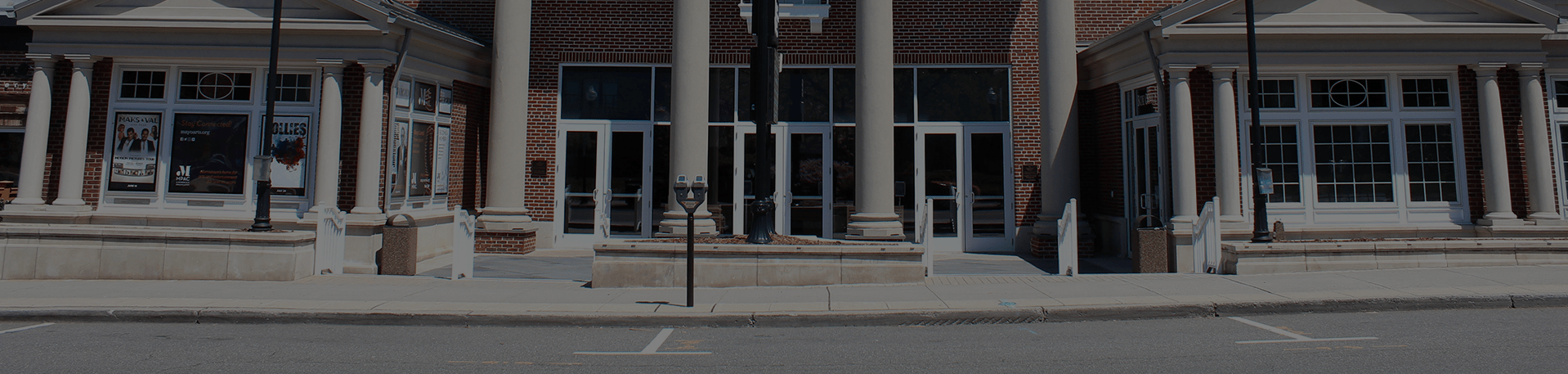




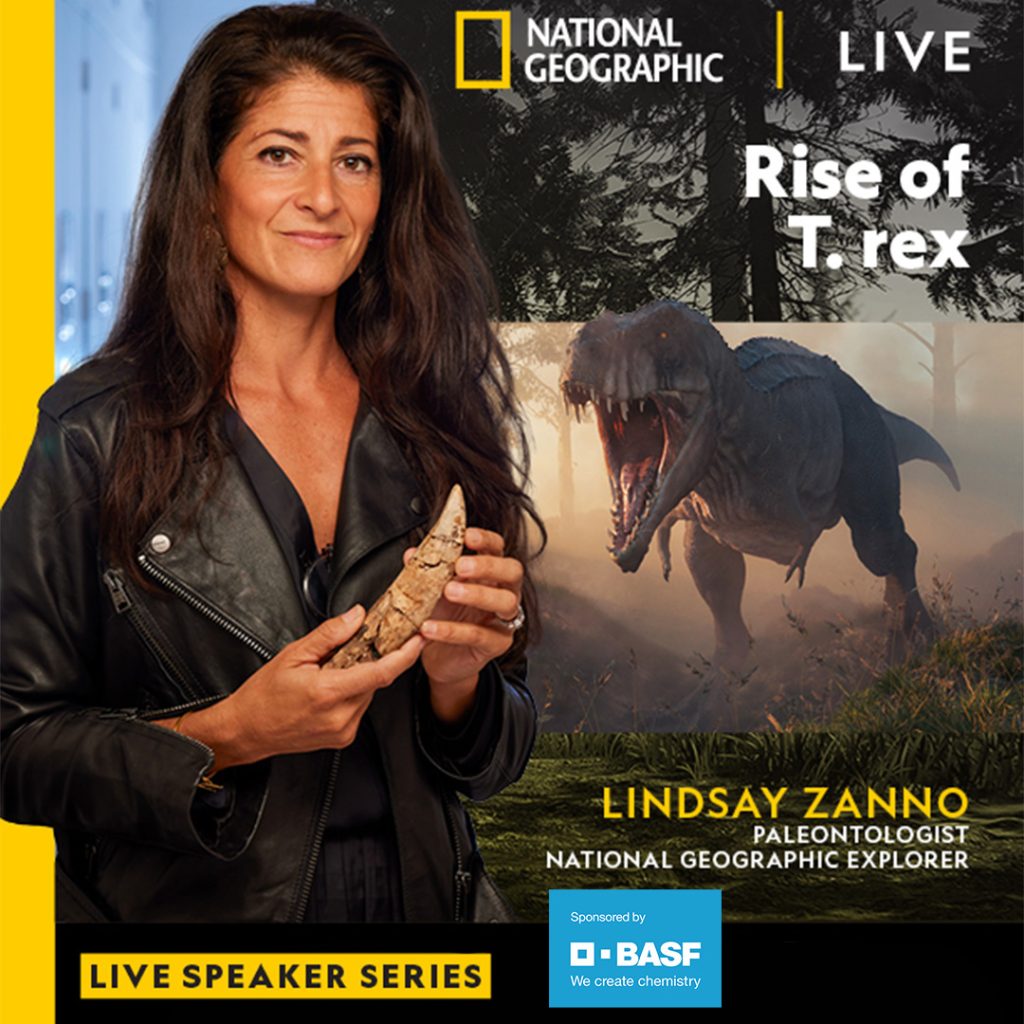
MPAC’s annual Sustainability Series returns for 2026 with a free presentation of National Geographic Live!: Lindsay Zanno: The Rise of T.rex on Wednesday, April 15 at 7:30 pm. This event is made possible through the generous sponsorship of BASF. Tickets are available through the MPAC box office only. There is a two ticket limit.
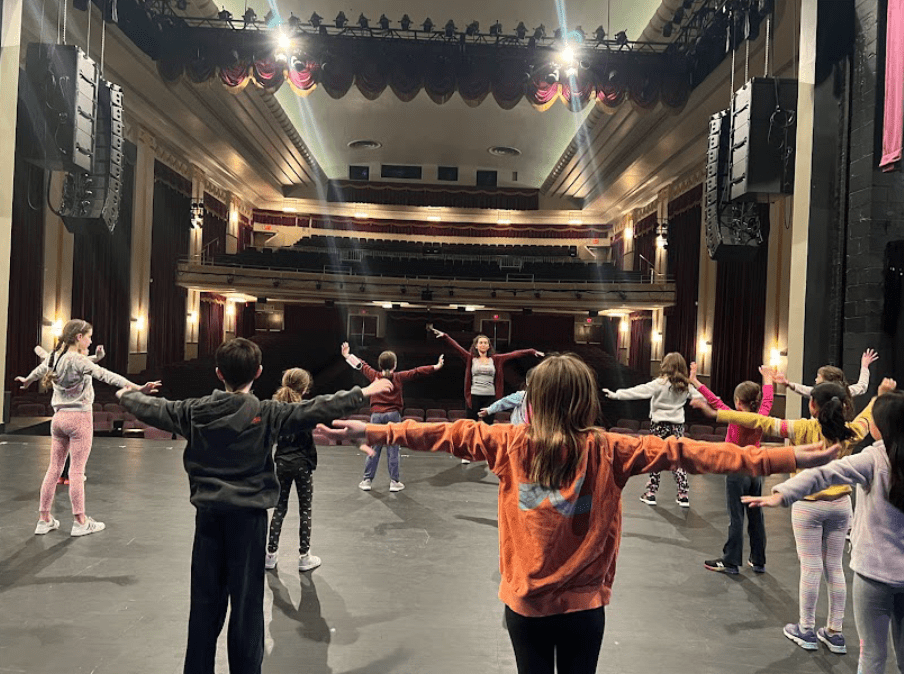
In addition to the evening public event, Dr. Zanno will also give a presentation to school children at MPAC earlier in the day.
Dr. Lindsay Zanno is Head of Paleontology at the North Carolina Museum of Natural Sciences and an Associate Research Professor in the Department of Biological Sciences at North Carolina State University. She is one of the world’s leading experts on the evolution of theropod dinosaurs. Zanno has a soft spot for the American West, where she has discovered more than a dozen new species, including Siats, one of the largest meat-eating dinosaurs on the continent, and Moros, North America’s tiniest tyrannosaur.
Tyrannosaurus rex is the most famous dinosaur out there, but few people know the true story of this species. We go on assignment with paleontologist and National Geographic Explorer Lindsay Zanno to dig sites in the remote deserts of the western U.S. to find out how T. rex evolved. Along the way, uncover the entire landscape—from plants to fish to mammals—where these memorable dinos reigned 66 million years ago.
“MPAC appreciates the support that BASF has provided for over a decade to help us bring scientists, photographers and other leading environmentalists into our community to discuss the Earth’s fragile ecosystems and how we can help to create a better world,” says Allison Larena, President and CEO, Mayo Performing Arts Center.
“Creating a more sustainable future requires curiosity, education, and action,” said Molly Birman, Head of Communications for BASF Corporation in the U.S. “We are proud to support the Sustainability Series at MPAC that brings science to life for the community. By ensuring these events are open to the public, including a free session for 1,300 local students, we hope more young people can discover the power of science and innovation early on.”